For the CEO ready to invest in AI without falling for the hype.
Facilitated by John Knox — technology-alignment advisor for medtech, healthtech, and B2B SaaS CEOs. Host of the weekly Executive AI Roundtable. 25 years fixing the hidden tech misalignment that quietly blocks growth.
Reserve Your Seat → Eight in the room, no more. Next cohort forming. Not sure? Request a 20-minute call to see if the workshop fits.Most CEOs are getting their AI education from vendors, the media, and Fortune 500 CEOs trying to spin layoffs. It's hard to separate the BS from the real.
You've been hearing about AI for a year. Maybe two. The hype is loud, the FOMO louder, and as a CEO, you're bombarded with more than you can act on. Somewhere in there are the vital few you actually need to act on to see results.
Three of those vital few are already in motion. A customer hinted they could build your product with Claude. A competitor just shipped what took your team a year. The same technology lets your engineering team ship what used to take a quarter. All three are real in 2026 — and all three are the same strategic call: where AI eats your moat, where it deepens yours, and what to ship next.
That is the whole workshop. Three hours separating what is necessary from what can wait. What's bullshit from what's real. What your team should be deploying right now versus what to ignore.
If your AI strategy today is "we pay for ChatGPT," you're at stage one — and most companies are stuck there with you. The opportunity arrives the moment you can name what to deploy first, what to delegate to AI, and where the handoff between human and AI lies. That's the point of this workshop.
You leave with a short list of tools and workflows worth piloting, a handle on key concepts so you can see through noise, and the case studies underneath both — real operators, real deployments, and the challenges they're hitting along the way.
Seven insights for Monday morning.
A working read on what LLMs can do, what they can't, and where they can cause problems if your team isn't paying attention.
The three deployment failure modes most companies hit, and how to spot them in your own org before investing your time, money, and credibility.
A way to pick your first pilot — one that does the crap work your team avoids and pays back within a quarter, not a year.
How to start moving past stage one — the trap of paying $5 a seat for Copilot and not moving the needle.
Which tools to put in your team's hands, which to gate, and which to ban outright — with the reasoning for each.
A 12-week starting plan, shaped to your business in the 1-on-1 with John — what to deploy first, what to leave for next quarter, where to bring help in.
A short list of the specific workflows already paying for themselves — AI sales prep and follow-up, code review bots gating every PR, transcript-to-CRM pipelines, in-product onboarding agents — pulled from CEOs running them in production, not from vendor decks, with a read on which one fits your team first.
A way to think about which parts of your product AI replaces, which it sharpens, and where the moat actually sits — so you can answer the customer who hinted they could build it themselves, and the competitor moving faster than you are.
Patterns from the weekly Executive AI Roundtable — no names, no vendor pitches, just what's running in production in companies your size.
Software development. The densest cluster. One founder built a bot named "Auto" that's added as a required reviewer on every pull request — a VM polls GitHub every fifteen minutes, runs a Claude Code review against the diff, posts line-by-line comments, and blocks the merge on critical issues. Another team treats Linear as the queue: a status flip to "ready for AI" wakes up a sandboxed runner, Claude ships the PR, a human reviews. A third runs a shared CLAUDE.md repo across the engineering org — new hires `git pull` and inherit the team's hard-won rules on day one. The designer at that company is now the highest-lines-of-code contributor.
Sales. A multi-stage personal assistant that scans each morning's calendar, pulls every prior transcript with each attendee, drafts a per-meeting briefing, then after the call grades it against a custom rubric, drafts the follow-up email, and posts notes to HubSpot. The operator just replies "yes." A separate team built a daily agent that mines a directory-less platform for ICP prospects, enriches them with email and LinkedIn, and auto-loads them into SmartLead — one Claude Code session, deployed to Railway. Demos started showing up on the calendar from prospects the founder had never heard of.
Marketing. Years of recorded sales calls feed a pipeline that extracts the prospect's actual pain-point phrasing, generates a landing page targeting each phrasing, and ships the same phrases into Google and Meta ads as long-tail keywords. Another operator runs an agent that ingests meeting recordings and connects each discussion point back to a constellation of recurring mental models from his own prior writing — the output becomes the weekly member report, the LinkedIn infographic, and the searchable archive in one pass.
Operations and knowledge. A skill that runs on cron every hour, checks the calendar for conflicts, and either re-arranges or alerts — same skill triggerable from Slack with a slash command. A done-for-you operational-reporting practice that ingests Stripe, HubSpot, and Help Scout into a warehouse, then exposes the data via MCP so customers can ask Claude questions against their own numbers. A two-skill setup that turns every founder email-to-self into a sorted task queue.
None of this is exotic. It's a handful of small, well-scoped automations on top of off-the-shelf tools — Claude, Claude Code, Linear, HubSpot, GitHub, Slack. The workshop is where you figure out which one is yours.
Two parts. Both included. Eight in the room, no more.
Three hours, live and virtual, with eight CEOs and founders. Structured around the questions you actually have: what AI is, what it isn't, where it's earning money, and where it's burning it.
A personal hour with John, after the workshop. Your business, your team, your stack — what to deploy first, what to avoid, what your team is actually ready for. This is where the workshop compounds.
If all three land, this room is yours.
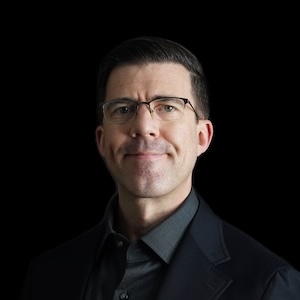
John facilitates the at-capacity weekly Executive AI Roundtable — a closed-door conversation for CEOs and founders working through AI in their own businesses. Every week, CEOs bring their wins, failures, and challenges to the room. The workshop distills what he learns from his network of CEOs and founders, as well as from his experience deploying AI to run Moving Average.
Underneath the Roundtable: 25 years building, advising, and investing in technology companies across seven industries, including MedTech, healthtech, B2B SaaS, marketplaces, and semiconductors. Class III medical devices through clinical trials. Mobile platforms serving millions at 99.9% reliability. App Store featured apps at Evernote. Hundreds of CEOs and founders mentored.
John is a TinySeed LP and mentor, working with B2B SaaS founders inside the accelerator. AI is John's seventh innovation cycle — he's helped operators navigate each of them since the dot-com era.
He writes the Moving Average essays on AI strategy — weekly, read by founders and operators in more than thirty countries.
Eight in the room, no more. Expect an email within two working days to schedule your workshop.
100% money-back guarantee
If you aren't convinced the workshop was worth every second, John will refund every dollar. No questions asked.
John will be in touch soon — typically within a day or two.
Not ready to reserve? Request a 20-minute call to see if the workshop fits.
The workshop costs money. These don't. Read three essays first — if the thinking lands, the workshop will too.
Most companies type into ChatGPT and call it AI strategy. The gap between them and the operator-class is widening fast.
A 12-week rollout: which tools to buy, which policies to publish, how to train your team, and how to measure results.
Before you pick AI tools, map your business operating system. Permissions, delegation, and the context that compounds.
The ones that come up most.
$3,000. That covers the 3-hour group workshop and the 1-on-1 follow-up.
Yes. If after the workshop and the 1-on-1 you don't think it was worth your time, John refunds the full price. No questions, no negotiation.
Workshops are scheduled to fit availability. Tell John what your week looks like, and he'll line up a session that fits.
Live, virtual, with John. Your 1-on-1 follows the group session.
Yes. It's the highest-leverage hour of the program. Every attendee gets one.
Yes. Tell John about your leadership group and he'll scope a custom session.
Eight, never more. The format only works when every person in the room can put their actual question on the table.
I'll get back to you shortly.
Thanks for reaching out. I'll get back to you shortly.