

Organizations that don't adopt AI internally will put themselves on a path for extinction. The competitive pressures will simply become too large. I've seen companies go from shipping big projects in a quarter to shipping big products in a matter of weeks. The speed of creation and research enabled by AI can't be matched by humans alone.
However, AI presents many challenges when it comes to protecting your intellectual property. Material solely created by AI isn't eligible for copyright or patent protection in the US. Simply providing prompts to an AI isn't enough — the US Copyright Office requires that a human exercise creative control over the expressive elements of the work.
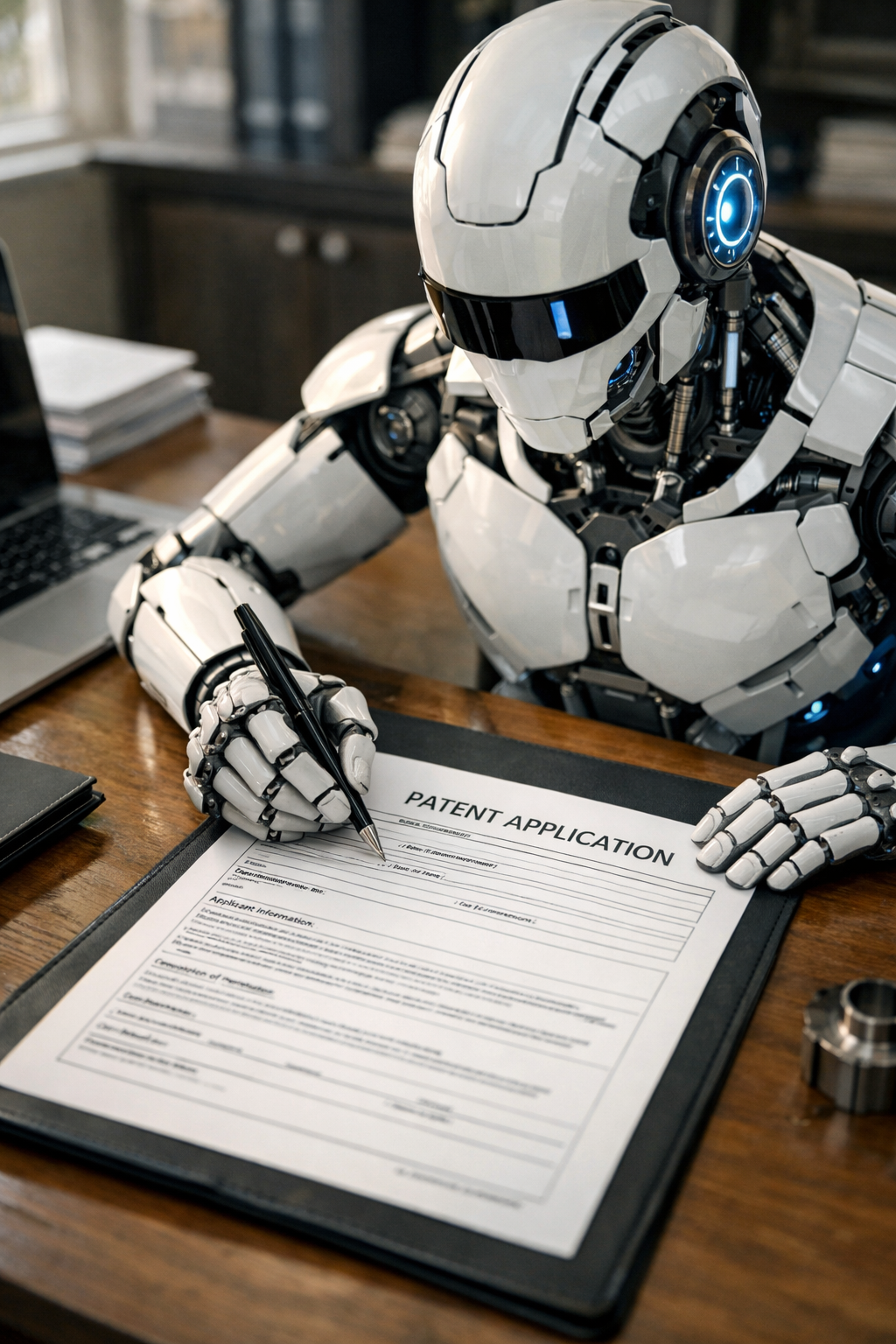
So how do you protect your product and other valuable creations? Two strategies do most of the work, and the rest of this is how to put them into practice.
Disclaimer: I am not a lawyer. You should consult with a qualified expert before making any decision regarding your IP. I make no warranties and disclaim all liability. Caveat Emptor.
AI Workshop for CEOs
Want to pressure-test your AI tooling and IP posture before something leaks? A three-hour live workshop with eight CEOs, plus a 1-on-1 to map the gaps specific to your business.
Reserve Your Seat →Free Assessment
Where is your AI tooling leaking IP you haven't named?
Most companies haven't audited their AI tooling against their trade-secret obligations. Take the 3-minute AI IP Risk Assessment to score your IP protection, policy coverage, documentation readiness, and vendor risk.
Take the Assessment →Trade Secrets
Think of Coca-Cola's secret recipe. It's locked in a vault somewhere, and only a handful of employees have access to it. That's a trade secret. Although you can't keep IP protection and reveal a trade secret to the public, you can maintain the protection of that IP indefinitely. Copyrights expire (currently life of author plus 70 years, or for work made for hire, 95 years from publication or 120 years from creation, whichever is shorter).
So, even if you can't protect AI-generated content with copyright or patents, you can protect them as trade secrets. This means that you must take strict measures to prevent public disclosure of the secrets. You should have appropriate confidentiality agreements with any vendors who might have access to your content, including AI vendors.
Practically speaking, this means NDAs and IP-assignment agreements — explicitly covering trade secrets and AI-assisted work product — with all employees and contractors. When it comes to AI tools, you will need to pay for any AI service you use, and also ensure that you do not allow the vendor to train off of your prompts or data. Don't let your employees put sensitive data into unapproved AI tools — including the AI features added to tools you don't think of as AI tools, such as Google's AI Overviews.
Disclosing your trade secrets to a free AI tool is a terrible idea. Most free tools train on your inputs unless somebody turns that off, which is like publishing your IP in a textbook for training AI. And training is not the whole risk. The law turns on whether the vendor owes you a duty of confidentiality — disclosure to someone under no such duty can extinguish the secret whether or not a model ever learns from it, and a free tool's terms rarely create one.
Document Human Authorship
You can copyright the human-contributed parts of a work. In a codebase consisting of AI-generated code and human-generated code, you can copyright the human-generated parts.
Ultimately, this means you need to keep good records of what the AI and what a human contributes to a codebase. If you don't, you can't identify and disclaim the AI-generated portions the way registration requires — and the Copyright Office can refuse a claim it can't separate from AI-generated material.
Both AI and version-control systems can help with this. For instance, Claude Code adds a "Co-Authored-By:" trailer naming the active model to the git commits it makes. Treat that as a default, not a control: any developer can switch it off in a settings file, and a squash or rebase erases it. If the record matters, check for the trailer in CI rather than hoping for it. If your employees add their human-generated code in separate commits, you will establish a record of authorship.
However, be careful not to squash AI and human commits together if you use this approach. Talk to your software engineers if that doesn't make sense to you.
Your Employee AI Policy: Five Steps to Protect Company IP
Here is the policy to implement this quarter:
Classify your data before it touches any AI tool. Decide which categories of information are off-limits (customer data, source code for core algorithms, unreleased product designs) and which are fair game (marketing copy drafts, internal process documentation, boilerplate code). If you don't draw the line, employees will draw it for you — inconsistently.
Use enterprise-tier AI accounts with data retention controls. Put company work on business or enterprise plans (ChatGPT Enterprise, Claude Team/Enterprise), which exclude your data from training by default. Default is not guarantee: on Claude Team and Enterprise a thumbs-up/down feedback report sends the whole conversation to Anthropic, where it may be used for training and kept five years, until an Owner turns the "Rate chats" setting off org-wide (Anthropic). Safety-flagged conversations can be reviewed on any tier. On personal plans the training toggle sits with the user and arrives pre-selected — assume it is on, and note that on Claude the same choice sets retention at five years rather than thirty days. Don't assume paying for a subscription protects you: read the data-use terms and check the exceptions. The licence is necessary but probably not sufficient on its own — courts weigh your whole set of measures, so the policy, training, and access controls in the other four steps are what make it hold up. This is the single most important step for protecting trade secrets.
Add IP-assignment and confidentiality clauses to employment and contractor agreements. No clause can create copyright in pure AI output — without human authorship there is nothing to own. What a clause can do is assign trade secrets, confidential information, and AI-assisted work product (including material not protectable by copyright or patent) to the company. Worker type matters: for employees, the company already owns scope-of-employment work automatically; for independent contractors, it owns even the copyrightable parts only under a signed written agreement. Have legal update your standard employment agreement and every contractor MSA.
Require human-contribution documentation for anything you plan to copyright or patent. The US Copyright Office requires documented human authorship. For code, this means separate git commits for AI and human work. For written content, track which sections a human wrote or substantially edited. Without this you may not be able to register the work, and a registration obtained without disclosing the AI material can be cancelled or disregarded by a court under 17 U.S.C. § 411(b). The copyright in the human-authored parts survives; the ability to enforce it cleanly does not.
Audit AI tool usage quarterly. Software tools add AI features constantly — your project management tool, your design tool, your CRM may all be feeding data to AI models now. Have your CTO inventory every tool in the organization and check whether its AI features protect your data or expose it.
Protecting IP When Using AI for Research
The riskiest AI research sessions don't look risky. Someone on your team asks an AI tool to size a market, compare vendor approaches, or pressure-test an unreleased design — and to get a useful answer, they describe the very thing you're trying to protect. The exposure lives in the prompt, not the AI's output.
At least one court has treated it as exactly that. In January 2026, a federal court in the Northern District of California dismissed a trade-secret claim in Trinidad v. OpenAI (No. 25-cv-06328-JST) because the plaintiff had developed the claimed secrets through consumer ChatGPT — handing them to the vendor was voluntary disclosure, and the secrecy the law requires was gone. It is an unpublished district-court order on a pro se complaint: persuasive, not binding. The flip side is protective. The better reading, and the one I would build a policy on, is that a business-grade agreement barring training and preserving confidentiality is the kind of reasonable measure trade-secret law expects, the same way a vendor NDA is. No court has held that yet, which is one more reason to make sure your agreement actually says those things.
Three rules keep research sessions safe:
- Route research through approved, business-grade accounts — never a free or personal-tier tool, no matter how quick the question feels.
- Classify before you prompt. Decide which details can't enter any external tool — formulations, core algorithms, unreleased designs — and give researchers a sanitized way to ask: describe the problem class, not the secret.
- Document human synthesis. If research output will feed a copyrightable or patentable asset, record what humans contributed along the way. The Supreme Court declined to review Thaler v. Perlmutter in March 2026, leaving the human-authorship requirement standing.
AI is the best thinking partner most teams have ever had for exactly this work — sizing a market, stress-testing a design, finding the paper nobody remembered. The account you run it through, and the retention terms behind that account, do most of the protecting.
The Share Button Is a Disclosure Event
Prompts and research sessions leak IP through what your team types. A share link leaks it through one click. Most AI tools have a "share" button that turns a private conversation — or a generated document — into a web page at a public URL. Through 2025 and 2026, several major tools shipped that feature in ways that made those pages findable by anyone, each through a slightly different mechanism:
- Meta AI (June 2025) published shared conversations into a public in-app "Discover" feed. Nothing was hacked — the interface simply didn't make it clear that "share" meant "broadcast to everyone." (Malwarebytes)
- ChatGPT (August 2025) offered an opt-in "make this chat discoverable" option; thousands of shared chats were crawled into Google before OpenAI removed it, calling it a short-lived experiment. (Search Engine Land)
- Grok (August 2025) generated share URLs that Google, Bing, and DuckDuckGo indexed — a reported ~370,000 conversations became searchable. (Forbes)
- Claude (surfaced July 2026 via a Reddit post).
Shared conversations and public Artifacts turned up in Google and Bing,
and what reporters and users found in them was serious: employee
performance reviews, API keys and login credentials, internal company
documents, and regulated data — named patients' medical reports and
clinical-trial results among it. The mechanism was mundane: the share
path was disallowed in
robots.txt, a crawl directive, so any index directive on the page went unread and a publicly posted share URL could still be listed. Anthropic cleared the search results within about a day. But de-listing doesn't un-publish what was already crawled, cached, or screenshotted — the individual share links stayed reachable, and a GitHub repository had already archived hundreds of the conversations. (Axios, TechRepublic)
Blocking a page in robots.txt stops search engines from
crawling it — but not from listing it when the link
shows up somewhere public. Keeping a page out of search takes a
noindex directive; keeping it confidential takes something
stronger still — authentication, or sharing scoped to your own
organization. A noindex tag is search hygiene, not a
privacy control.
Responsibility here is shared. No private databases were breached —
in every case a person clicked "share," and vendor defaults, missing
warnings, and absent noindex tags did the rest. That makes
it a governance problem you can act on.
For IP, the click matters. A conversation you shared publicly — or that got indexed — is disclosure to people under no obligation to keep it secret. That won't automatically erase a trade secret in every case; trade-secret status is fact-specific. But public exposure can seriously impair or defeat it, and it is strong evidence that you didn't take the reasonable measures the law expects. The logic the court applied in Trinidad above — voluntary disclosure to a party with no duty of confidentiality — applies with more force to a page the whole web can read.
The tier you're on changes the exposure. On Anthropic's plans, public share links are a consumer-tier capability — Free, Pro, and Max can create them, while Team and Enterprise restrict sharing to members of your organization (Anthropic). So the business-grade-account rule from earlier isn't only about training terms; it also governs who can see what your team shares.
Two things to do about it:
For new share links: treat a public share link as publication. Where your tools offer admin controls, disable or restrict public sharing for anyone handling company data; where they don't, make "never share a conversation containing company information outside an organization-gated channel" an explicit rule. This is a policy line, not a total ban — approved, organization-gated sharing is fine.
For what's already out there: have someone inventory the share links and published artifacts your team has already created, revoke the ones you don't need, and request removal from search for anything sensitive that got indexed. If a shared chat contained credentials or API keys — a common find in every one of these incidents — rotate them. If it exposed regulated data such as customer or health records, run it through your incident-response process, not just your cleanup list.
Registration, Patents, and the On-Sale Bar
I've observed very few technology businesses register software or hardware designs with the US Copyright Office. Marking copyright without registering it before infringement offers only limited protection. You can sue for damages and profit resulting from the violation, but not the statutory damages or attorney's fees available to a work registered with the optimal timing (17 U.S.C. § 412) — and the fee award is usually what decides whether suing is worth it.
This practice makes sense. In technology businesses, the concern is rarely stolen content. It is surviving due diligence. Regardless of copyright, an investor wants to see that you have the right to use the IP you claim.
Most technology businesses rely on secrecy to protect their internal IP instead. That's great news, because you can protect AI-generated work as a trade secret.
Publicly published content is a different story, of course. What you publish in a book or on your web page isn't a trade secret. It can't be. Without meaningful human authorship, published AI-generated content enters the public domain with no copyright fallback. If you want to prevent others from taking IP you plan to develop, you will need to establish copyright — that is, you need to have a human write it, document the fact, and assign the rights to your business.
Patents are the one sticky area. If you have invented something novel and of value, you may wish to file a patent both as a moat around your business, and as protection for your own right to use the invention. A trade secret kept purely internal generally won't qualify as prior art to invalidate a competitor's later patent. The trap runs the other way: if you commercially sell a product embodying the secret, that sale can start the on-sale bar against your own later application under Helsinn Healthcare v. Teva (2019), even if the underlying details remain confidential.
There's a narrow fallback: the AIA's prior use defense (35 U.S.C. § 273) allows a trade secret holder who commercially used an invention in the United States at least one year before the earlier of the competitor's filing date or their qualifying public disclosure to continue that use — even if the competitor's patent is valid. It is narrow: it reaches processes and equipment used in a commercial process, must be proved by clear and convincing evidence, and is personal to your business rather than something you can license out. It doesn't invalidate the patent, but it protects your right to keep doing what you were already doing.
For this reason, you should use caution when creating new inventions; don't introduce any doubt that it lacks a human inventor. And consider whether your invention is independently discoverable — if a competitor could reach it through their own R&D, patenting may be the stronger play.
Two Harder Research Risks: Unfiled Inventions and Data Retention
Routing research through a business-grade account covers most sessions. Two situations carry risk beyond that, and both are worth checking before a patent filing or a vendor renewal.
Research that touches an unfiled invention. Prior-art searches, novelty checks, and feasibility studies all get better answers when the researcher describes the invention precisely — which is exactly the problem. Run through a business-grade account with confidentiality terms, that description is manageable: a disclosure to a vendor bound to keep it confidential is not a public disclosure. Run through a consumer tool, two separate problems open up — the reasoning in Trinidad v. OpenAI, that developing a secret through a consumer tool is voluntary disclosure, puts trade-secret status at risk, and if the conversation is shared or indexed, the disclosure can become public for patent purposes as well.
A public disclosure before filing starts a one-year clock in the US under the inventor's grace period (35 U.S.C. § 102(b)(1)). Europe and China have no general grace period — only narrow six-month exceptions for evident abuse or a recognised exhibition — so the same disclosure can bar a patent outright there. Japan, Canada, Korea and Australia do give twelve months, with procedural conditions you have to meet at filing. Don't assume the US clock travels. If a filing is anywhere on the roadmap, keep the invention out of consumer tools and file before you go looking for validation.
"Won't train on your data" is not "won't keep your data." These are two separate promises, and a business-grade agreement often makes only the first. Vendors commonly retain prompts for a defined window for abuse monitoring, which means research sessions sit on someone else's infrastructure for a while — reachable by subpoena, and exposed in a breach. Zero-retention handling is usually a separate arrangement rather than a default, and more often available on an API tier than in the chat product. So ask your vendor two questions instead of one: do you train on this, and how long do you keep it? The answer to the second is the one that decides whether your most sensitive research belongs in the tool at all.
Conclusions
Your best bet for protecting IP is to document what humans create and use trade secrets to protect everything else. Here are some strategic actions to take today:
- Have your general counsel or outside IP attorney conduct an IP audit; identify what content, code, and inventions are most valuable to your business
- Have your CTO or VP of Engineering audit AI usage across the organization, specifically where it intersects with your most valuable IP
- Have your CEO or COO work with legal and engineering to determine what policy and training you need to protect that IP as it interacts with AI tools
If you don't already have a written policy that captures these decisions, the AI policy generator walks you through the questions and produces a draft you can hand to legal.
Tactically, have your engineering and legal teams ask of each tool:
- Do we have an agreement with this AI vendor that preserves the secrecy and ownership of our IP?
- Have we configured this tool to prevent it from using our data for training new models?
- Do we have a path to audit what AI versus a human is creating?
Finally, have your CTO periodically take stock of all software tools used in the organization. Which tools have added AI? Are those tools protecting your IP? What free tools might tempt staff to leak IP to an AI vendor?
The law will evolve — some AI companies will lobby Congress for stronger copyright protections, while others benefit from the status quo when training their models off of scraped data. Plenty of businesses will claim copyright over AI-generated content without doing the work to establish it. Whether competitors call that bluff remains to be seen. Regardless of which direction the law goes, documenting what humans create and protecting the rest as trade secrets still holds.
Of course, having a policy is one thing — getting your organization to follow it is another. For practical guidance on hiring for AI skills, training your team, and overcoming resistance to new workflows, see The AI People Problem: Hiring, Training, and Resistance.
Frequently Asked Questions
How should companies protect intellectual property when employees use generative AI?
Two strategies cover the vast majority of cases. First, treat AI-generated work product as a trade secret — lock it down with NDAs, access controls, and vendor agreements that prevent training on your data. Second, track human contributions to any AI-assisted work you plan to publish or register for copyright. The US Copyright Office requires documented human authorship. Combine these with employment and contractor agreements that assign trade secrets, confidential information, and AI-assisted work product to the company. For employees, scope-of-employment work is owned automatically; contractors need a signed written agreement. No clause can create copyright in pure AI output — which is exactly why the trade-secret fallback matters.
What are the best practices for preventing AI-related IP loss from employee use?
Start with an audit: identify which AI tools employees use, which ones have access to sensitive IP, and whether vendor agreements preserve your rights. Then implement three controls: (1) prohibit free-tier AI tools for any work involving confidential information — free tools typically train on your inputs; (2) configure paid AI tools to disable training on your data; (3) require employees to document what a human versus an AI contributed to any work product. Finally, have your CTO periodically inventory all software tools in the organization to catch new AI features that may not protect your IP.
How do you create an employee AI tools policy for intellectual property protection?
A practical policy covers four areas. Approved tools: list which AI services employees may use for work, with paid accounts configured to protect your data. Disclosure requirements: employees must disclose when AI was used to create work product, especially for anything filed for copyright or patent protection. Documentation standards: define how to record human versus AI contributions — for code, this might mean separate git commits; for written content, it might mean tracked-changes documents. Vendor management: legal reviews every AI vendor agreement to confirm the company retains rights to outputs and that inputs aren't used for model training.
How do you protect intellectual property when using AI for research?
Route every research session through a business-grade AI account whose terms bar training on your data — in Trinidad v. OpenAI (N.D. Cal., January 2026), a trade-secret claim was dismissed because the secrets had been developed through consumer ChatGPT, which the court treated as voluntary disclosure. Classify data before the session so protected details never enter a prompt; researchers can describe the problem class instead of the secret. And if the research will feed a copyrightable or patentable asset, document the human contribution — copyright requires a human author, and a patent requires a human inventor.
Can using AI for research jeopardize a patent application?
It can, and the account tier decides most of it. Describing an unfiled invention to a business-grade AI account whose terms preserve confidentiality is not a public disclosure — a vendor bound to keep it confidential is not the public. Describing it to a consumer tool is riskier: it can cost you trade-secret protection, and sharing or indexing that conversation can make the disclosure public for patent purposes too. In the US, a public disclosure starts a one-year clock under the inventor's grace period (35 U.S.C. § 102(b)(1)). Europe and China have no general grace period, only narrow six-month exceptions, so the same disclosure can bar the patent entirely there; Japan, Canada, Korea and Australia allow twelve months subject to conditions you must meet at filing. If a patent filing is on the roadmap, keep the invention out of consumer tools and file before running validation research.
Can sharing an AI chat expose company trade secrets?
Yes. Most consumer AI tools can turn a conversation or a generated document into a public web page, and through 2025 and 2026 several — ChatGPT, Grok and Claude — had shared pages indexed by search engines, while Meta AI published them straight into a public in-app feed, exposing credentials, internal company documents, employee reviews, and regulated data such as named patients' medical records. A public or indexed share link is disclosure to people under no duty of confidentiality: it can seriously impair or defeat trade-secret protection and is strong evidence you didn't keep the information secret. Tier matters — on Anthropic's plans, public sharing is a Free/Pro/Max capability, while Team and Enterprise restrict sharing to your organization. Treat share links as publication, disable public sharing where admin controls allow, and inventory and revoke the links your team has already created.
For a deeper dive into the case law and specific recommendations, see my full research report on AI-generated content and IP ownership in US law.